

A website can be one of the most valuable assets for a business. It attracts potential customers, provides information, supports sales, and helps build credibility. However, many businesses underestimate how much website performance affects their success.
A slow website does not always create an obvious problem. There may be no warning message, no visible failure, and no immediate sign that revenue is being lost. Instead, the damage happens quietly through visitors leaving, lower search visibility, and fewer customers completing important actions.
In today’s digital environment, website speed is not just a technical concern. It is a business performance issue.
A fast, reliable website creates better customer experiences, while a slow website can create barriers between your business and potential customers.
Why Website Speed Matters More Than Ever
Customer expectations have changed. People are used to fast digital experiences and expect websites to respond quickly on any device.
When someone visits a website, they are making a decision within seconds:
- Should I stay and explore?
- Can I trust this business?
- Is this website easy to use?
- Can I quickly find what I need?
A slow website can negatively influence these decisions before visitors ever interact with your products or services.
Modern customers expect:
- Quick page loading
- Smooth navigation
- Mobile-friendly experiences
- Easy access to information
- Reliable online interactions
When a website fails to meet these expectations, businesses risk losing valuable opportunities.
The Hidden Revenue Impact of Slow Websites
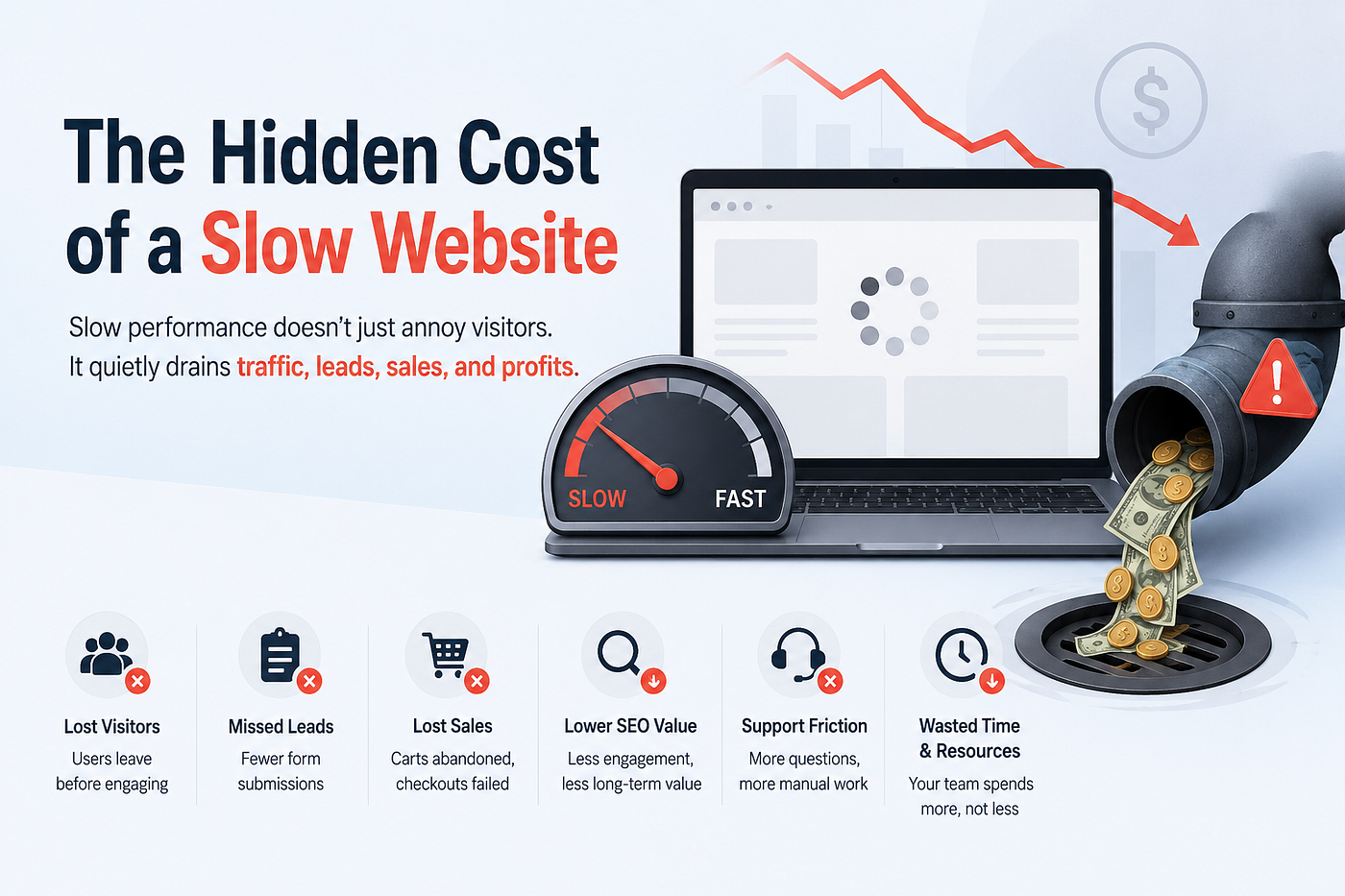
Many businesses focus on increasing website traffic but overlook what happens after visitors arrive.
A website may receive hundreds or thousands of visitors, but if those visitors leave because pages load slowly, traffic alone does not create business results.
Slow performance can lead to:
- Fewer sales
- Lower customer inquiries
- Reduced bookings
- More abandoned shopping carts
- Lower engagement with important pages
Every delayed interaction creates friction. The more obstacles customers face, the less likely they are to complete a desired action.
Lost Customers Start With Small Delays
A visitor may leave because:
- A product page takes too long to load
- A contact form does not respond quickly
- Images appear slowly
- Navigation feels frustrating
- The website does not work properly on mobile
These individual moments may seem small, but together they can significantly impact business performance.
A competitor with a faster, smoother website may capture customers who were originally interested in your business.
How Slow Websites Damage Customer Trust
A website is often the first impression customers have of a company. Performance problems can influence how people perceive a brand.
A slow website may make visitors think:
- The business is outdated
- The company does not prioritize customer experience
- The website is unreliable
- The business may not provide quality service
Customers often connect online experiences with overall brand credibility.
A professional website should communicate confidence and reliability. Speed is an important part of that experience.
The Connection Between Website Speed and User Experience
User experience focuses on how easily and comfortably people can interact with a website.
A well-performing website helps users:
- Find information quickly
- Explore services or products
- Complete purchases
- Contact the business
- Return for future interactions
Slow websites create frustration by interrupting the customer journey.
Mobile Users Are Especially Sensitive to Performance
Mobile devices represent a major source of website traffic. However, mobile users often have less patience for slow-loading pages.
A website that performs poorly on smartphones may experience:
- Higher abandonment rates
- Lower engagement
- Fewer conversions
- Reduced customer satisfaction
Businesses should ensure their websites are optimized for all devices, not just desktop computers.
Slow Websites and Search Engine Rankings
Website performance also plays an important role in search engine optimization.
Search engines aim to provide users with helpful, high-quality results. Websites that provide poor experiences may struggle to compete in search rankings.
Slow websites can affect SEO through:
- Lower user engagement
- Increased visitor abandonment
- Poor mobile performance
- Reduced visibility in search results
A business may invest heavily in content and marketing, but technical performance issues can limit the results.
Why SEO and Website Speed Work Together
Successful search optimization requires more than keywords.
A strong website needs:
- Valuable content
- Good structure
- Mobile compatibility
- Fast loading times
- Positive user experiences
Improving website speed strengthens the foundation that supports online visibility.
Common Causes of Slow Website Performance
Understanding why websites become slow is the first step toward improvement.
Large Image Files
Images are important for creating attractive websites, but oversized files can significantly increase loading times.
Common solutions include:
- Compressing images
- Using modern file formats
- Reducing unnecessary graphics
- Optimizing images for mobile devices
Too Many Website Features
Additional features can improve functionality, but excessive plugins, animations, and third-party tools can slow down performance.
Businesses should regularly review their websites and remove anything that does not provide real value.
Outdated Technology
Older website platforms, themes, and software may not perform efficiently with modern requirements.
Regular updates help improve:
- Speed
- Security
- Compatibility
- Reliability
Poor Hosting Performance
Website hosting affects how quickly information is delivered to visitors.
A reliable hosting environment can improve:
- Loading speed
- Website availability
- Overall performance
Practical Steps to Improve Website Speed
Improving website performance does not always require a complete rebuild. Many businesses can achieve significant improvements through targeted changes.
1. Test Website Performance Regularly
The first step is understanding current performance.
Businesses should monitor:
- Loading times
- Mobile performance
- Slow pages
- Technical issues
Regular testing helps identify problems before they affect customers.
2. Optimize Website Content
Review website elements that may slow pages down.
Consider:
- Compressing images
- Removing unnecessary files
- Simplifying page layouts
- Reducing unused features
A cleaner website is often faster and easier to use.
3. Improve Technical Performance
Technical improvements may include:
- Updating website software
- Optimizing code
- Improving server performance
- Using caching solutions
These improvements help pages load more efficiently.
4. Focus on Mobile Optimization
Make sure the website works smoothly on smartphones and tablets.
Important considerations include:
- Responsive design
- Simple navigation
- Fast-loading content
- Easy-to-use forms
A mobile-friendly website creates better experiences for a larger audience.
Website Speed Is a Competitive Advantage
Businesses often compete for customer attention in crowded digital spaces. A faster website can become a meaningful advantage.
When two companies offer similar products or services, customers are more likely to choose the one that provides a smoother online experience.
A high-performing website helps businesses:
- Build trust faster
- Keep visitors engaged
- Generate more leads
- Increase conversions
- Support marketing efforts
Performance improvements are not just technical upgrades—they are investments in business growth.
Turning Website Performance Into Business Results
The hidden cost of a slow website is not only measured in seconds. It is measured in lost opportunities.
Every visitor who leaves because of slow performance represents a potential customer who may never return. Every search ranking lost because of poor user experience can reduce future visibility.
A fast website creates a stronger connection between businesses and customers. It improves trust, supports SEO efforts, and makes it easier for visitors to take action.
Website speed matters because every second influences the customer experience. By prioritizing performance, businesses can create digital platforms that attract visitors, build confidence, and deliver better results.